

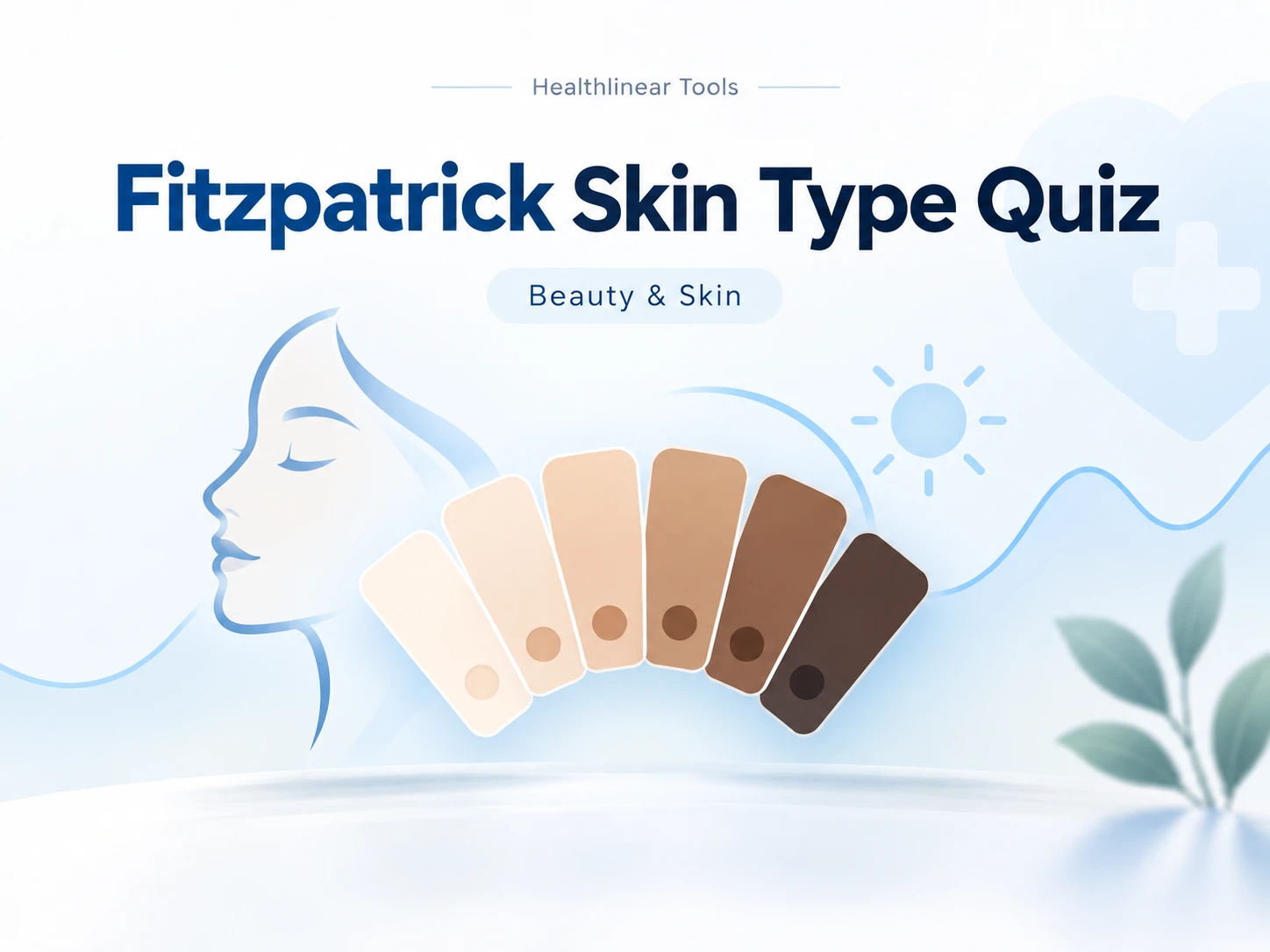
The Fitzpatrick scale is a widely used classification of how skin responds to UV exposure, developed by dermatologist Thomas Fitzpatrick. Knowing your type helps guide sun-protection and skincare decisions — it’s an educational estimate, not a diagnosis or a cancer-risk prediction.
About this tool: this is an educational self-assessment based on the Fitzpatrick skin type classification, not a clinical skin exam. It does not predict skin cancer risk or diagnose any skin condition. For a proper assessment of your skin cancer risk or any skin concern, see a dermatologist. See our medical disclaimer.
Why skin type matters for sun protection and skincare
Your Fitzpatrick skin type reflects how much melanin your skin produces and how it responds to UV exposure — information that goes beyond just skin color, since factors like eye color, hair color, and burn/tan history all factor in. Dermatologists use this scale to guide sun-protection recommendations, laser and cosmetic procedure planning, and general skincare advice, since UV sensitivity varies significantly even within similar-looking skin tones.
Related reading
- Anti-Aging Tips: 27 Science-Backed Secrets
- What Is Tattoo Scarring and How to Treat It
- All beauty & skin articles
Frequently asked questions
Does a higher Fitzpatrick type mean I don't need sunscreen?
No. All skin types can be damaged by UV exposure over time, including hyperpigmentation, premature aging, and skin cancer risk — daily sun protection is recommended regardless of Fitzpatrick type, even for those who rarely or never burn.
Can my Fitzpatrick type change over time?
Your underlying genetic skin type doesn't change, but perceived skin tone can shift with tanning, seasonal sun exposure, or certain skin conditions. The quiz reflects your skin's inherent UV response, not just its current appearance.
Why do dermatologists use the Fitzpatrick scale?
It helps guide decisions like laser treatment settings, chemical peel strength, and post-procedure care, since skin types respond differently to these treatments and carry different risks of complications like hyperpigmentation.