


Nexium (esomeprazole) and Prevacid (lansoprazole) are both proton pump inhibitors that treat the same core conditions through the same basic mechanism, and the differences between them are mostly about specific molecule properties and formulation options rather than fundamentally different approaches. This guide compares their mechanisms, approved uses, dosing, and available forms.
This is general information, not medical advice.
Nexium vs Prevacid at a glance
| Nexium (esomeprazole) | Prevacid (lansoprazole) | |
|---|---|---|
| Drug class | Proton pump inhibitor (PPI) | Proton pump inhibitor (PPI) |
| Available OTC | Yes (Nexium 24HR) | Yes (Prevacid 24HR) |
| Special forms | Delayed-release capsule, oral suspension | Capsule, SoluTab (orally disintegrating) |
| Approved for | GERD, erosive esophagitis, H. pylori eradication (combo therapy), pathological hypersecretion | Duodenal ulcer, GERD, NSAID-associated gastric ulcer risk reduction, H. pylori eradication |
| Chirality | Single S-isomer of omeprazole | Racemic mixture |
How PPIs work, and why esomeprazole is technically special
Both drugs belong to the proton pump inhibitor class, which works by blocking the H+/K+-ATPase enzyme system, commonly called the proton pump, in the stomach’s acid-producing parietal cells. This is the final step in gastric acid production, so blocking it substantially reduces how much acid the stomach makes, regardless of what triggered acid release in the first place.
What makes esomeprazole (Nexium) notable chemically is that it’s the S-isomer of omeprazole (the active ingredient in Prilosec) isolated on its own, rather than the racemic (mixed S- and R-isomer) form. The label describes both isomers converting to the same active inhibitor once they reach the acidic environment of the parietal cell, meaning the therapeutic endpoint is ultimately similar, but esomeprazole’s isolation as a single isomer was originally marketed as offering more predictable metabolism and blood levels compared with the racemic mixture.
Lansoprazole (Prevacid) is a racemic PPI itself, described in its label as being transformed into two active species that inhibit acid secretion by blocking the same proton pump system. Functionally, both drugs land on the same core acid-suppression mechanism; practical differences tend to show up more in specific formulation options and prescribing nuances than in a dramatically different clinical effect for most patients.
What each is approved for
Both cover the core PPI indication set: GERD, treatment and maintenance of erosive esophagitis, and combination therapy with antibiotics for H. pylori eradication. Prevacid’s label specifically lists short-term treatment of active duodenal ulcer and reducing the risk of NSAID-associated gastric ulcers in patients with a documented history of gastric ulcer who need to continue NSAID use, uses that show up prominently in its indications section. Nexium’s label covers pathological hypersecretory conditions, including Zollinger-Ellison syndrome, among its indications.
Both are available over the counter (Nexium 24HR, Prevacid 24HR) specifically for frequent heartburn occurring two or more days a week, a narrower self-treatment indication than the full prescription-strength label.
Formulation differences
Prevacid offers a SoluTab version, an orally disintegrating tablet that dissolves on the tongue without water, useful for patients who have difficulty swallowing capsules, including some pediatric patients and those with swallowing disorders.
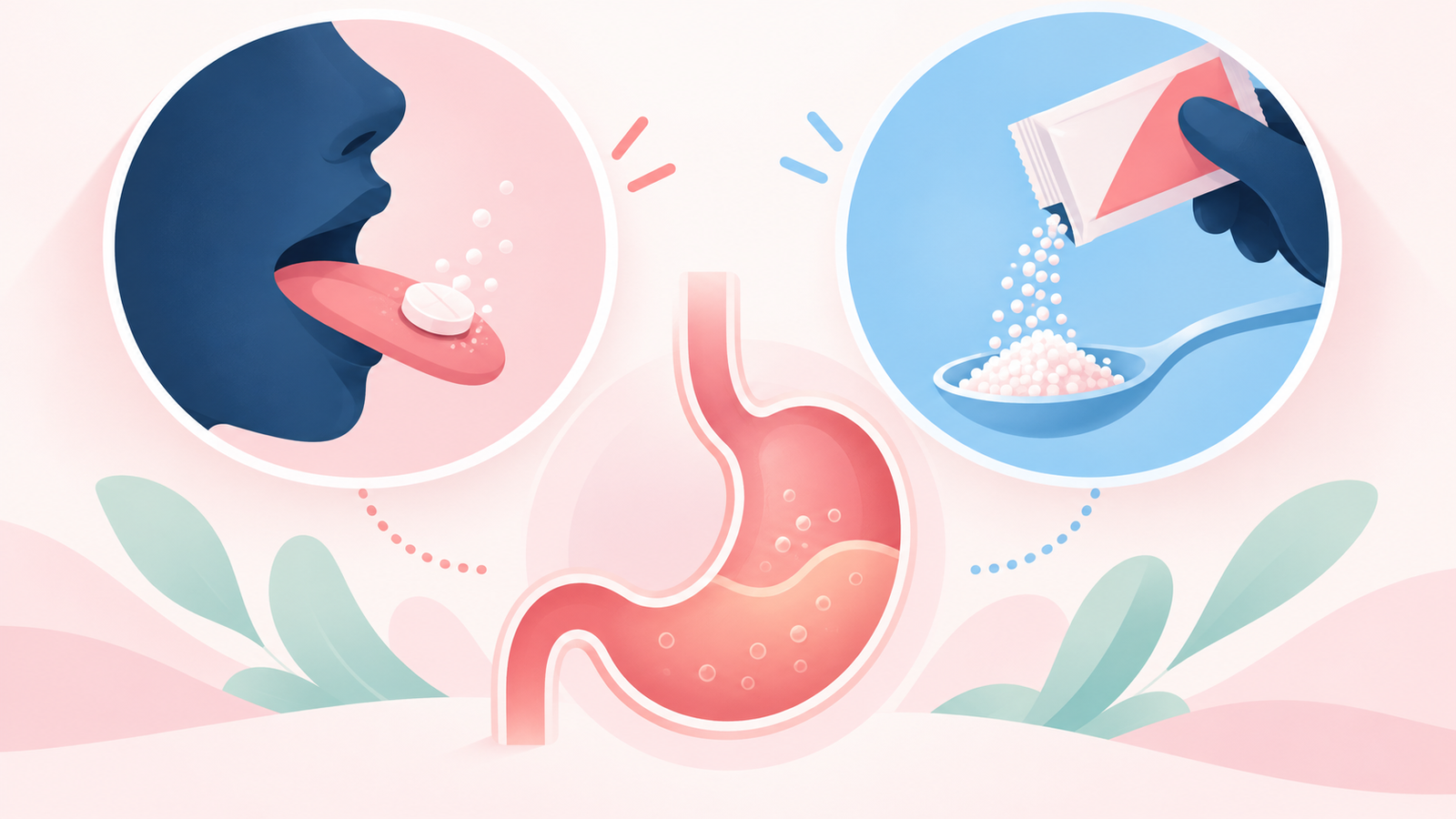
Nexium offers a delayed-release oral suspension option, with packets available in a range of strengths (2.5 mg to 40 mg) containing the same enteric-coated granules used in the capsule form mixed with inactive granules, intended for patients who need an alternative to swallowing an intact capsule, such as via feeding tube or for young children.
Drug interactions and long-term use considerations
Both carry warnings common to the PPI class: an association in observational studies with increased risk of Clostridium difficile-associated diarrhea, and cautions regarding long-term use and its association with a modestly increased risk of bone fracture, vitamin B12 deficiency, and hypomagnesemia, particularly notable in patients also taking diuretics or other drugs affecting magnesium levels, and typically monitored with prolonged treatment. Both interact with drugs whose absorption depends on stomach acidity (since reducing acid changes the gut environment those drugs need to dissolve and absorb properly).
Who each might suit
Factors that may point toward Nexium:
- A prescriber’s specific reason to prefer the single-isomer formulation’s pharmacokinetic profile
- A need for the oral suspension format for feeding tube administration
- Treatment of pathological hypersecretion conditions specifically listed in its label
Factors that may point toward Prevacid:
- Difficulty swallowing capsules, where the SoluTab option offers a genuine formulation advantage
- A documented active duodenal ulcer or NSAID-associated gastric ulcer risk specifically named in its label
- Pediatric use where the SoluTab’s water-free administration is preferred
Frequently asked questions
Is Nexium just a purified version of Prilosec?
Esomeprazole (Nexium) is the single S-isomer of omeprazole (Prilosec’s active ingredient), rather than the racemic mixture Prilosec contains. Both ultimately convert to the same active inhibitor in the acidic parietal cell environment.
Can either be taken long-term?
Both are generally intended for defined treatment courses per their labels, though longer use is sometimes appropriate under medical supervision; long-term PPI use of any kind carries monitoring considerations for bone health, magnesium, and B12 levels.
Is Prevacid available as a dissolving tablet?
Yes, as Prevacid SoluTab, which dissolves on the tongue without water, useful for patients with swallowing difficulty.
Are Nexium and Prevacid available without a prescription?
Yes, both have OTC versions (Nexium 24HR, Prevacid 24HR) specifically for frequent heartburn occurring 2 or more days a week; these are lower-strength, shorter-course formulations than the prescription versions.
Do PPIs increase infection risk?
Published observational studies suggest an association between PPI therapy and increased risk of Clostridium difficile-associated diarrhea, a class-wide consideration for both these drugs.