

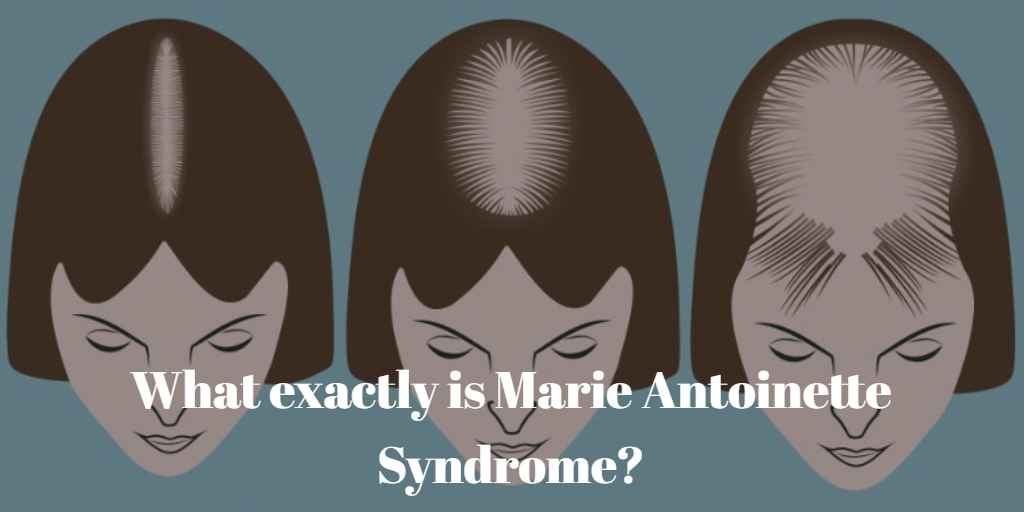
Marie Antoinette syndrome, medically called canities subita, refers to hair appearing to turn white or gray very rapidly, sometimes described as overnight, but current research does not clearly support the idea that hair can actually change color while still attached to the scalp. This guide explains the real, more likely explanation, the history behind the name, and what actually happens.
This is general information, not medical advice.
The name and its origin
The term comes from a popular historical account: French queen Marie Antoinette’s hair reportedly turned white the night before her execution by guillotine in 1793, supposedly from the extreme stress of anticipating her death. Cases of dramatic, rapid hair whitening attributed to stress or trauma have been documented and discussed for over 200 years since, and the name “Marie Antoinette syndrome” for this phenomenon was specifically applied in medical literature starting in 2009; the medical term canities subita comes from Latin words meaning sudden whitening. The condition is also sometimes called Thomas More syndrome, after a similar historical account involving the English statesman.
What science actually says about “overnight” whitening
This is the important nuance often missing from popular accounts: current research does not clearly support the idea that already-grown, pigmented hair can lose its color while still attached to the scalp. Hair pigment (melanin) is deposited into the hair shaft by cells at the hair follicle as the hair grows; once a strand of hair has grown out, it is essentially dead keratin tissue, and there’s no established biological mechanism for actively removing pigment from hair that has already formed.
The more scientifically plausible explanation for cases that appear to show dramatic, rapid whitening is a form of selective, accelerated shedding: extreme stress is understood to be capable of triggering a stress-related hair loss condition where pigmented hairs fall out disproportionately faster than the unpigmented (gray or white) hairs already present, especially in someone who already had a meaningful amount of natural graying mixed into their hair. This would create the visual appearance of hair having “turned white” rapidly, when what actually happened is that already-white hairs became disproportionately more visible as pigmented hairs were shed.
Proposed mechanisms behind the underlying phenomenon
Even without a settled, clearly established biological mechanism for the popular “overnight change” version of the story, researchers have proposed several related hypotheses connecting extreme stress to changes in hair pigmentation and hair health, including effects related to rapid destruction of pigment-producing processes and stress-related abnormalities affecting the hair growth cycle. The exact molecular mechanism remains an area of ongoing research rather than a fully resolved question.
Is stress-related graying real at all?
Yes, separately from the specific “overnight” framing, research has established that chronic stress can accelerate the natural graying process over a longer timeframe (weeks to months, not overnight), through effects on the stem cells responsible for pigment production in hair follicles. This slower, genuinely biologically supported form of stress-related graying is distinct from the dramatic, instantaneous transformation the “Marie Antoinette syndrome” name evokes.
Frequently asked questions
Can hair really turn white overnight from stress?
This is scientifically disputed. Current research does not support a clear biological mechanism for already-grown hair changing color while still on the scalp. A more likely explanation for dramatic-seeming cases is rapid, stress-related shedding of pigmented hairs, leaving already-present gray or white hairs more visible.
Did Marie Antoinette’s hair really turn white overnight?
This is a popular historical account rather than a medically documented case; it’s the origin of the syndrome’s informal name, but its literal accuracy as a single-night transformation isn’t independently verifiable by modern standards.
Is stress-related hair graying real?
Yes, research has found that chronic stress can accelerate natural graying over weeks to months through effects on hair follicle pigment-producing cells, a real but much slower process than the “overnight” framing implies.
Is “Marie Antoinette syndrome” an official medical diagnosis?
The medical term used in literature is canities subita (sudden whitening/graying), and it has been discussed in some medical journal articles, though it isn’t a formally standardized diagnostic entity in major classification systems, and the underlying dramatic “overnight” claim remains scientifically debated.
What should I do if my hair seems to be graying rapidly?
Rapid or unusual hair changes, especially alongside other symptoms, are worth discussing with a doctor or dermatologist, since various medical conditions, nutritional deficiencies, and thyroid issues can affect hair color and health, separate from ordinary age-related graying.