


Nifurtimox is an antiparasitic medicine used against two tropical diseases. In the United States, it is sold as Lampit and approved for one purpose: treating Chagas disease (American trypanosomiasis) in children, from birth up to age 18, who weigh at least 2.5 kg. Around the world, nifurtimox is also used together with eflornithine to treat late-stage African sleeping sickness. Both diseases are caused by single-celled parasites called trypanosomes, and both are serious, but both are treatable.
One rule on the Lampit label surprises people: it is contraindicated in patients who consume alcohol during treatment. This guide explains what nifurtimox is, how Chagas disease works, how Lampit is dosed and taken, what side effects are common, the safety warnings (including a genotoxicity warning and a pregnancy warning), why alcohol is prohibited, how nifurtimox is used for sleeping sickness, and what to ask a specialist.
This is general information based on FDA labeling and public health guidance, not medical advice. Chagas disease and sleeping sickness need diagnosis and treatment by a specialist, often with guidance from public health authorities.
Nifurtimox at a glance
| Drug class | Nitrofuran antiprotozoal |
|---|---|
| US brand name | Lampit (Bayer), first approved August 6, 2020; full approval in 2023 |
| FDA-approved use | Chagas disease caused by Trypanosoma cruzi in patients from birth to under 18 years weighing at least 2.5 kg |
| Forms | 30 mg and 120 mg tablets, functionally scored |
| Schedule | Three times daily with food for 60 days |
| Common side effects | Vomiting, abdominal pain, headache, decreased appetite, nausea, fever, rash |
| Key contraindications | Known hypersensitivity; alcohol consumption during treatment |
| Other uses | With eflornithine (NECT) for second-stage sleeping sickness |
What Chagas disease is
Chagas disease is caused by the parasite Trypanosoma cruzi. It is spread mainly by triatomine insects (“kissing bugs”) in parts of the Americas, and it can also pass from mother to baby during pregnancy, through blood transfusion or organ transplant, and through contaminated food or drink. The World Health Organization notes that it can be treated with two antiparasitic medicines, benznidazole and nifurtimox, and that both are nearly 100% effective in curing the disease when given soon after infection.
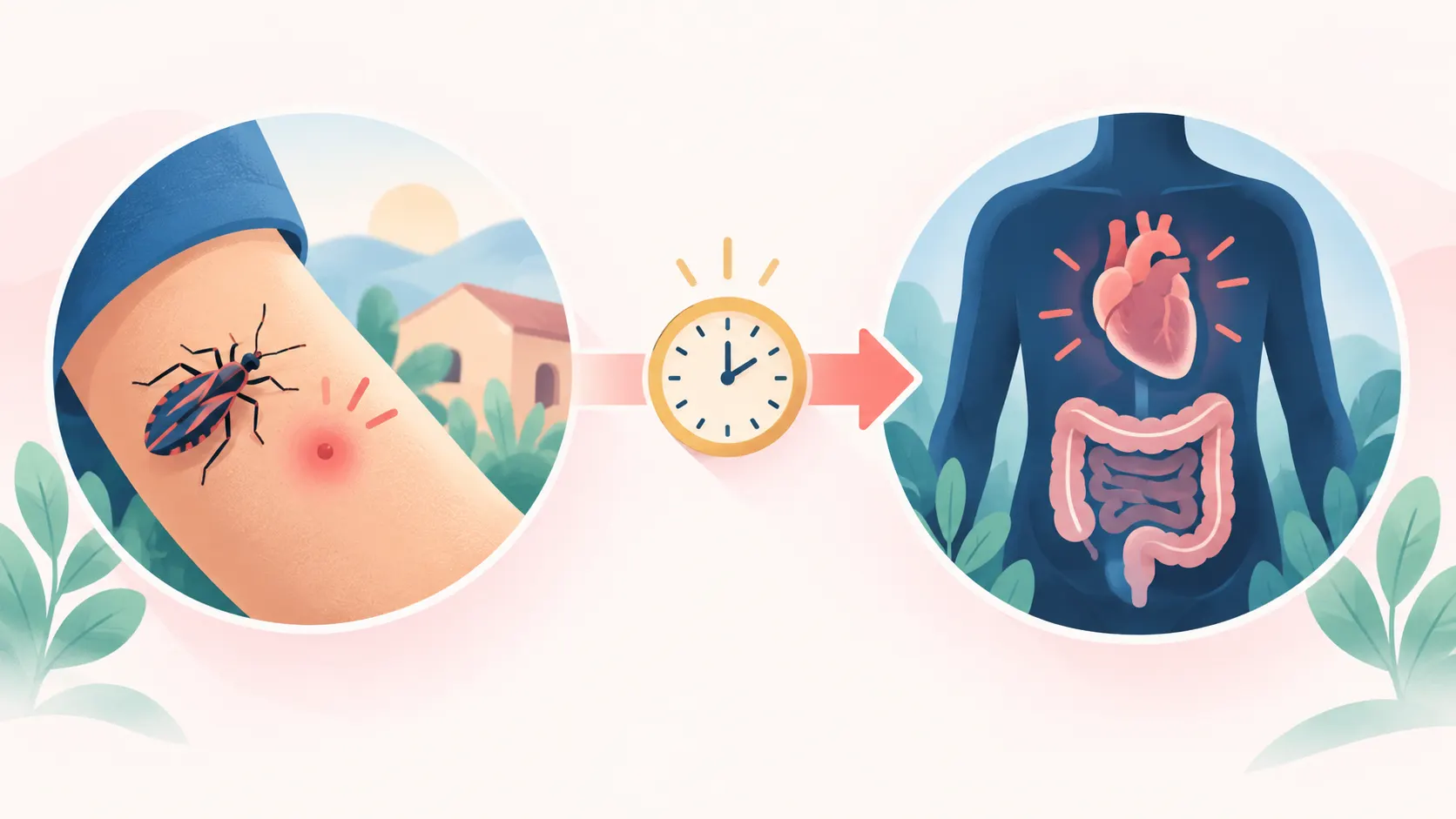
The illness has two phases:
- Acute phase. Just after infection, there may be fever, fatigue, swelling near the bite, or no noticeable symptoms at all. It is often missed.
- Chronic phase. The parasite can stay in the body for years or decades. In a portion of people, it eventually damages the heart or digestive tract.
Because early treatment works best, doctors screen children born to mothers with Chagas disease and treat infections found in babies and young children. Diagnosis involves blood tests, and treatment decisions are made by specialists in infectious diseases, often with guidance from public health authorities.
What nifurtimox is and how it works
Nifurtimox belongs to the nitrofuran family. The Lampit label states that its mechanism of action is not fully understood. Studies suggest that the parasite’s own nitroreductase enzymes activate the drug, producing toxic intermediate compounds and reactive oxygen species that damage the parasite’s DNA and kill both the intracellular and extracellular forms of T. cruzi.
That same DNA-damaging action is the reason for one of the label’s key warnings (described below) about genotoxicity and carcinogenicity.
Lampit: who it is approved for
The FDA approved Lampit on August 6, 2020, for the treatment of Chagas disease in pediatric patients from birth to under 18 years of age who weigh at least 2.5 kg. It first received accelerated approval, and in June 2023 the FDA converted it to full approval.
It is not approved by the FDA for adults. Adults with Chagas disease are treated under specialist guidance, commonly with benznidazole or, in some circumstances, nifurtimox, in line with public health recommendations. If you are an adult diagnosed with Chagas disease, ask an infectious disease specialist about the right regimen.
Dosing
Lampit tablets are dosed by body weight and taken three times a day with food for 60 days.

| Body weight | Total daily dose of nifurtimox |
|---|---|
| Less than 41 kg | 10 to 20 mg per kg |
| 41 kg or greater | 8 to 10 mg per kg |
A term newborn weighing at least 2.5 kg is included. The prescriber chooses the exact tablet count from the label’s dosing table and adjusts if the child’s weight changes.
How to give it
- Always with food. The label requires tablets to be taken with food.
- Scored tablets. Both strengths (30 mg and 120 mg) are functionally scored so they can be split at the line into halves (15 mg and 60 mg). The label says to split them by hand, not with a tablet-splitting device.
- For children who cannot swallow tablets, the tablets can be dispersed in water and given as a slurry, taken with food.
- Three times a day. Give at consistent times, spaced through the day.
- Missed dose. Take it as soon as possible with food. If it is within 3 hours of the next scheduled dose, skip the missed dose and take the next one at the regular time. Do not take two doses to make up for a missed one.
- Complete the full course. The label stresses finishing the entire 60 days to prevent recurrence of the infection.
- Check weight regularly. The label says to check body weight every 14 days, since dosing may need to change if weight falls.
Side effects
Lampit’s approval was based on a trial of pediatric patients with Chagas disease. Adverse reactions were reported in about 64.5% of patients overall, and most were mild (76.5%) or moderate (22.0%). Treatment was stopped because of adverse reactions in 4.2% of patients (5.5% in the 60-day group).
The most frequently reported adverse reactions in patients treated for 60 days were:
| Side effect | Frequency |
|---|---|
| Vomiting | 14.6% |
| Abdominal pain | 13.2% |
| Headache | 12.8% |
| Decreased appetite | 10.5% |
| Nausea | 8.2% |
| Fever (pyrexia) | 7.3% |
| Rash | 5.5% |
| Diarrhea | 4.6% |
| Anemia | 2.7% |
| Weight decrease | 2.7% |
| Eosinophilia | 2.3% |
Many of these are stomach-related, which is why taking the medicine with food matters. If a child vomits a dose, ask the prescriber how to handle it. Loss of appetite and weight loss can build up over 60 days, which is why the label asks for weight checks every 14 days.
Warnings and precautions
Potential for genotoxicity and carcinogenicity
Because nifurtimox works by damaging DNA in the parasite, studies have found it can also cause genetic damage in other systems, and the label warns of a potential for genotoxicity, carcinogenicity, and mutagenicity. The benefit of treating a serious parasitic infection is weighed against this risk, and the label recommends use only for the approved indication and duration. This is a key reason to complete the prescribed course as directed but not to extend or repeat it without specialist advice.
Embryo-fetal toxicity
The label warns of risk to a developing baby. It calls for a pregnancy test before starting in females of reproductive potential, and advises effective contraception during treatment and for 6 months after the last dose. Patients should tell their healthcare provider about a known or suspected pregnancy right away.
Worsening of neurological and psychiatric conditions
People with a history of neurological or psychiatric disorders may experience worsening of their conditions. Lampit should be given under close medical supervision in these patients or if neurological or psychiatric drug reactions occur.
Hypersensitivity
Allergic reactions have been reported, including hypotension, angioedema (swelling that can involve the face or throat), trouble breathing, itching, rash, or other severe skin reactions. The label notes that a hypersensitivity reaction could be caused by Lampit or could be an immune response triggered by Chagas disease during treatment. At the first sign of a serious reaction, treatment is stopped and emergency care is needed.
Decreased appetite and weight loss
Loss of appetite, nausea, and vomiting can lead to weight loss. Check weight every 14 days, and tell the doctor if a child is not eating.
Porphyria
Nitrofuran derivatives such as Lampit may precipitate acute attacks of porphyria. Patients with porphyria should be treated only under close medical supervision.
Alcohol: why it is contraindicated
Unlike many medicines where alcohol is merely “not recommended,” the Lampit label makes it a contraindication: Lampit is contraindicated in patients who consume alcohol during treatment. The label states that concomitant use of Lampit with alcohol may increase the incidence and severity of undesirable effects, similar to other nitrofurans and nitroheterocyclic compounds. Patients are advised to discontinue alcohol use during treatment.
In practice this means:
- Older adolescents and any adult caregivers preparing food or medicine should know about it, since the patient population includes teenagers up to age 18.
- Avoid alcohol in all forms, including in liquid medicines, mouthwash, and cooking, for the full 60 days.
- Treatment is a limited period, and the restriction applies during it. Ask the prescriber whether to wait after the last dose.
This mirrors the pattern in other antiparasitic and antibiotic drugs. See our guide to metronidazole and alcohol for a related example, including the hidden alcohol in liquid medicines.
Monitoring and follow-up
- Weight every 14 days during treatment.
- Tolerability checks. The prescriber will ask about vomiting, abdominal pain, appetite, mood, and sleep, and about any rash or swelling.
- Pregnancy testing before starting in people who can become pregnant.
- Long-term follow-up. After treatment, doctors follow patients with blood tests over time to see whether antibody levels fall (seroconversion). The FDA approval required a follow-up study of seroconversion at four years, which shows that confirming a cure can take a long time.
- Family screening. Because Chagas disease can be passed from mother to child, relatives and siblings may need testing.
Nifurtimox compared with benznidazole
Nifurtimox and benznidazole are the two medicines available for Chagas disease, and the WHO describes both as effective. They are chemically related but not identical, and choosing between them depends on age, availability, side effects, and the specialist’s judgment. Benznidazole is also FDA-approved for children, in a narrower age range, while Lampit’s approval covers birth to under 18 years and includes newborns weighing at least 2.5 kg. Both require weeks of treatment and both cause stomach and skin side effects in some patients. If one is not tolerated, the specialist may consider the other.
The Lampit approval studied two regimens, 30 days and 60 days. The label’s recommended course is 60 days, and the 30-day group had fewer adverse reactions, but the recommended regimen is what appears in the label. Do not shorten or extend the course without the prescriber’s instructions.
Testing, prevention, and awareness
- Who should be tested. Doctors consider testing people who lived in or traveled long-term to areas where Chagas disease is common, people who received blood transfusions or organ transplants in such regions, and children whose mothers have the infection.
- Babies. Infants born to mothers with Chagas disease are usually tested, since treatment in the first year of life is highly effective according to public health guidance.
- Kissing bugs. Reducing contact with the insects that spread the parasite includes sealing cracks in homes, using screens, and avoiding sleeping in poorly built housing where these insects live, in areas where they are found.
- Food and drink. Rarely, infection spreads through food contaminated with insect feces, so safe food handling matters in affected regions.
- Blood and organ safety. Blood banks in many countries screen donations for the parasite.
- Heart and digestive checks. People with chronic infection may need periodic heart tests such as an ECG and, if symptoms appear, evaluation for digestive problems.
If you have concerns about possible exposure, ask a doctor about testing. Early diagnosis is the best chance for a cure.
Nifurtimox and sleeping sickness
Nifurtimox has a second major role, in African trypanosomiasis (sleeping sickness), a different disease caused by a related parasite and spread by tsetse flies. The CDC’s clinical guidance states that second-stage infection with T. b. gambiense, when the parasite has reached the central nervous system, is treated with nifurtimox-eflornithine combination therapy (NECT) or with fexinidazole, depending on severity and access to regimens. The CDC notes that NECT appears more effective and less toxic than eflornithine alone.
NECT was developed by the Drugs for Neglected Diseases initiative (DNDi) and consists of 14 intravenous eflornithine infusions over 7 days combined with oral nifurtimox three times a day. It is given in specialized treatment settings in endemic countries. For details on eflornithine, see our guide to eflornithine.
Living with treatment: practical tips for families
- Make it routine. Tie doses to meals so “three times a day with food” is easy to remember.
- Choose foods a child will eat. Small, frequent, familiar meals help if appetite falls.
- Split tablets by hand, and use the slurry method if swallowing is hard.
- Keep a dose log to avoid missed or doubled doses.
- Track weight every two weeks, and share the numbers with the care team.
- Watch for rash, swelling, or breathing trouble, and get urgent care for them.
- Report mood or behavior changes and any worsening of a neurological or psychiatric condition.
- Avoid alcohol completely.
- Finish all 60 days, even if the child feels well.
- Keep follow-up appointments, because confirming cure takes time.
Questions to ask the specialist
- Is Lampit or another medicine the right choice for this patient’s age and weight?
- How will we handle vomiting, poor appetite, or weight loss?
- Should a teenager or caregiver take special precautions about alcohol?
- If pregnancy is possible, what testing and contraception are needed?
- What follow-up tests will show whether treatment worked, and when?
- Should other family members be tested?
- What symptoms mean we should call right away or go to the emergency room?
Frequently asked questions
What is nifurtimox used for?
In the United States, as Lampit, it treats Chagas disease in pediatric patients from birth to under 18 years weighing at least 2.5 kg. Elsewhere it is also used with eflornithine for second-stage African sleeping sickness.
What is the difference between nifurtimox and Lampit?
Nifurtimox is the drug. Lampit is Bayer’s brand name of nifurtimox tablets approved by the FDA.
How long is Lampit taken?
Three times a day with food for 60 days. The full course should be completed to prevent the infection from returning.
Can you drink alcohol while taking Lampit?
No. The label contraindicates alcohol consumption during treatment, because alcohol may increase the incidence and severity of undesirable effects.
What are the side effects of Lampit?
The most common in the pediatric trial were vomiting (14.6%), abdominal pain (13.2%), headache (12.8%), decreased appetite (10.5%), nausea, fever, and rash. Serious warnings include hypersensitivity, worsening of neurological and psychiatric conditions, and embryo-fetal toxicity.
Is nifurtimox safe in pregnancy?
The label warns of embryo-fetal toxicity. A pregnancy test is required before starting in people who can become pregnant, and effective contraception is advised during treatment and for 6 months after the last dose.
Does nifurtimox cure Chagas disease?
The WHO states that nifurtimox and benznidazole are nearly 100% effective in curing the disease when given soon after infection. Cure is confirmed through follow-up blood tests over time, which can take years.
Can adults take nifurtimox?
Lampit is FDA-approved for pediatric patients. Adults are treated under specialist guidance, often with benznidazole, and decisions depend on the situation and public health recommendations.
Does it cause cancer?
The label warns of a potential for genotoxicity, carcinogenicity, and mutagenicity based on studies of its DNA-damaging action, so it should be used for the approved purpose and duration under medical supervision.
References
- FDA. LAMPIT (nifurtimox) tablets, prescribing information (2023).
- FDA. LAMPIT approval package (August 6, 2020).
- FDA. LAMPIT conversion to full approval letter (June 2023).
- DailyMed. LAMPIT (nifurtimox) tablets, film coated: label.
- World Health Organization. Chagas disease (American trypanosomiasis).
- CDC. Clinical care of human African trypanosomiasis (sleeping sickness).
- DNDi. Nifurtimox-eflornithine combination therapy (NECT).